Hungarian Wound Care Society
Archivum > Wound Healing BlogIntroductions or leads to the portal site's Hungarian blog posts in English

Horse Chestnut and Wound Healing
February 23, 2023
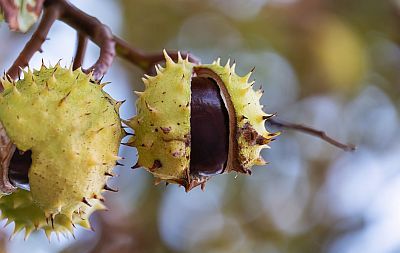 The Herbal Section of the Hungarian Society of Pharmacy has chosen horse chestnut as the Herb of the year - reported many domestic media. Our Wound Healing Blog follows and has processed the relationship between plants and wound care and wound healing in a series of entries, starting with the 2013 winner, the Milk Thistle. So let's continue this tradition!
Some evidence suggests that horse chestnut extract can be effective in wound healing. A study showed that when applied locally, the extract reduced inflammation and improved wound healing in animals.
The Herbal Section of the Hungarian Society of Pharmacy has chosen horse chestnut as the Herb of the year - reported many domestic media. Our Wound Healing Blog follows and has processed the relationship between plants and wound care and wound healing in a series of entries, starting with the 2013 winner, the Milk Thistle. So let's continue this tradition!
Some evidence suggests that horse chestnut extract can be effective in wound healing. A study showed that when applied locally, the extract reduced inflammation and improved wound healing in animals.
Loofah and Wound Healing
February 16, 2023
 All that is needed is sunlight for the gel that could be used to remedy the lack of drinking water on a large scale, Qubit.hu reported on February 9. Princeton University researchers have developed a water purifier that only needs sunlight to turn polluted water into drinking water of good quality. Referring to the Technology Networks article, it was also written that the structure of the gel, reminiscent of a sponge made from loofah fruit, enables not only effective but also fast filtration. I admit, I have never heard of the loofah, but I remembered Gábor Mészáros' article published in the 2021/2 issue of the Sebkezelés-Sebgyógyulás magazine, in which he also wrote that there are more than 5,000 wound treatment products and methods available to us today. Why can't loofah be one of them? This is what I am looking into in this blog post.
Iron and Wound Healing
February 9, 2023
 Iron supplementation during childhood and adolescence in low- and middle-income countries has a favorable effect on intelligence, Pharmaonline.hu wrote on January 31, referring to a study by Zekun Chen and his colleagues. The report also pointed out that iron deficiency is closely related to delayed nervous system (brain) development, poorer school performance and behavioral disorders. Children and adolescents living in low- and middle-income countries are most exposed to this risk. So let's take a brief look at the role of iron in wound treatment and healing this week, namely by using artificial intelligence for the first time in the history of the Wound Healing Blog!
Lysine and Wound Healing
February 2, 2023
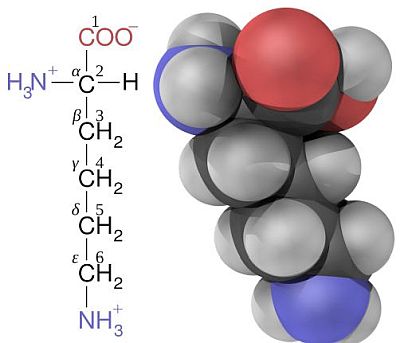 The campus of the Hungarian University of Agriculture and Life Sciences (MATE) has developed health-protecting dairy products together with a company, Weborvos.hu reported on January 23. The project symbolizes the most important objective of the university, that is, that in order to adapt education to market and social needs, they carry out their research and development activities in close cooperation with corporate partners. One of the planned results of the collaboration was a new type of Trappist cheese enriched with vitamin D, porcini mushrooms and lysine. As an unplanned benefit, we can consider this blog post, in which, as an idea gained from this article, this week I briefly review the use of lysine in wound treatment and wound healing.
Cuttlefish and Wound Healing
January 26, 2023
 The development of the squid's brain is shockingly human - Qubit.hu reported on January 16. In their research based on embryonic studies of the North American squid (Doryteuthis pealeii), molecular biologists from Harvard University found that the key elements of the formula for advanced intelligence are formed along the same evolutionary mechanism on Earth. The stem cells of the squids created almost the same dense and complex tissue structure as those previously observed only in the nervous system of vertebrates. Their realization inspires them to investigate how and when different cell types are formed during tissue growth, and me to briefly review how cuttlefish relate to wound management and wound healing.
Vitamin K and Wound Healing
January 19, 2023
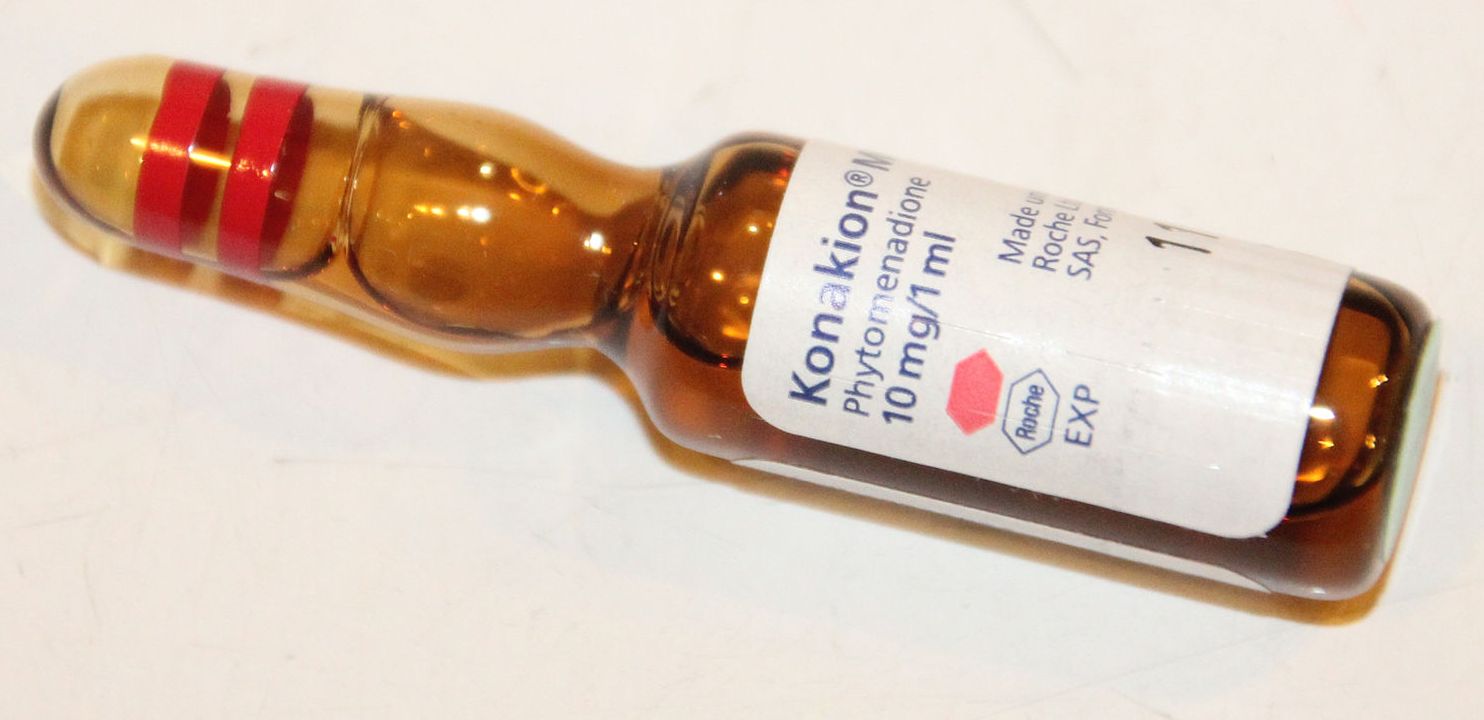 A little-known vitamin in Hungary, K2, can help prevent calcium from building up in the blood vessels, Pharmaonline.hu wrote on January 9. More and more evidence shows that the substance can reverse arteriosclerosis, but its rare deficiency in a healthy body can be responsible for its development and cause severe bleeding. Research also shows that survival of heart patients is improved with vitamin K2 supplementation. This article about K2, which is found in fermented foods (e.g. sauerkraut) and animal-derived foods such as milk and eggs, which supports the work of vitamin D, is the reason why this week we review the relationship between vitamin K and wound care.
Salt and Wound Healing
January 12, 2023
 Salt not only raises blood pressure, but also increases stress - Qubit.hu reported on December 29. Researchers at the University of Edinburgh examined hormones called glutocorticoids, which support cardiovascular, cognitive and metabolic cell function, among other things, in mice. It was observed that the stress hormone level was much higher in the mice kept on a diet with a higher salt content, either after physical activity or in a state of rest. The timing of the basic article is probably not a coincidence, most people eat more than usual during the holidays, so they probably exceed the recommended amount of salt. The physical effects of its consumption are relatively well known, but its connection to wound management and wound healing is perhaps less so. The second blog post of the year 2023 serves for a brief insight into this.
Palladium and Wound Healing
January 5, 2023
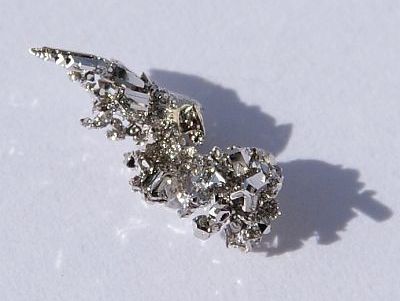 Tudomanyplaza.hu published an article on the role of palladium in the pharmaceutical industry on December 25. One of the most commonly used metals as a catalyst is palladium, suitable for forming diverse chemical bonds - we learned from the presentation. ELTE chemists recently proved that it can catalyze the transformation even in trace amounts. Their results attracted such enormous interest worldwide that even the unreviewed version of the article was among the most read 2% of all scientific publications ever published. The Suzuki reaction, which was awarded the Nobel Prize in 2010 and is now routinely used, was also mentioned, but not the palladium's applicability in wound treatment. I will make up for this in this week's blog post.
Circadian Rhythm and Wound Healing
December 29, 2022
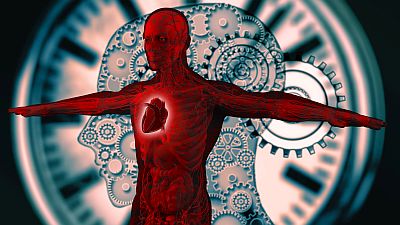 Researchers in Ireland have found an explanation for the phenomenon that our daily biological clock can affect the effectiveness of vaccines. According to the coverage of the Hvg.hu Tudomány column, experts from the RCSI University of Medical and Health Sciences in Ireland investigated changes in the mitochondria of immune cells, which are key to the vaccine response. These mitochondria come in two forms; they can take long net loops or broken into small pieces. When which form is preferred is controlled by the circadian clock within the dendritic cells. Does the circadian rhythm play a role in wound healing? – I am looking for the answer to this in this week's blog post.
Amoxicillin and Wound Healing
December 22, 2022
 Amoxicillin, cephalosporins and other widely used antibiotics are in short supply in several countries, Medicalonline.hu reported on December 12. Quoting the Index article, they also noted that manufacturers attribute the shortage to several factors. The demand increased in the first place due to the fact that after the lifting of the restrictions introduced during the pandemic, the demand increased because more people are getting sick. There are problems with the supply chain, from the ingredients to the packaging, and we must not forget the effect of price restrictions by the authorities. While this remains the case, some advocate shorter courses of antibiotics to conserve supplies, while others believe that limiting the duration of treatment means that some people will not recover from their infection. Does it have an effect, can this have an effect on wound treatment, to put it another way, how do antibiotics, and especially amoxicillin, relate to wound treatment? We are looking for the answer to this question in this week's blog post.
Ivermectin and Wound Healing
December 15, 2022
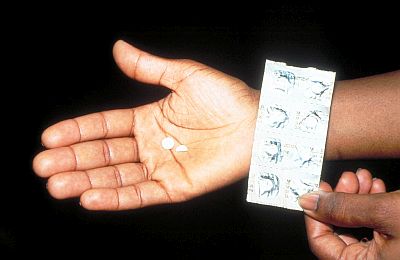 It was finally revealed what ivermectin is good for - Telex.hu reported on Santa's Day. According to recent research from North Carolina State University, two antiparasitic drugs, this and fluralaner, may be effective against bed bugs on chicken farms. The name ivermectin may be familiar from the fact that in the past it was often mentioned as a miracle drug to defeat Covid, but scientific research does not support its use to treat or prevent the disease caused by the coronavirus. And can it be used in wound treatment, apart from the fact that in many researches the experimental animals are dewormed beforehand with this agent? – this week's blog entry seeks the answer to this question.
Cannabis and Wound Healing
December 8, 2022
 On November 29, Hvg.hu reported on an article published on JAMA Network, according to which placebo is just as effective in pain relief as cannabis. During the analysis of the 20 studies included in the research, the authors came to the conclusion that among the participants in the experiments, those treated with "sham medicine" felt significantly less intense pain. In their review and meta-analysis, Filip Gedin and his colleagues did not mention the use or applicability of this mind-altering drug during wound treatment. I will fill this "gap" in this week's blog post.
Leprosy and Wound Healing
December 1, 2022
 According to animal experiments by researchers at the University of Edinburgh, the bacterium that causes leprosy can almost double the size of the liver by stimulating healthy growth. Infostart.hu, which reported on the discovery on November 21, also mentioned that Mycobacterium leprae does this in order to acquire more infectable tissue, but its ability can also be used by science to regenerate organs. In a study published in the Cell Reports Medicine journal, Samuel Hess (Edinburgh, United Kingdom) and his colleagues also showed that the bacterium made the liver cells young again, which could thus reproduce faster again. The DNA of the cells showed a picture as if it belonged to a much younger animal, even a fetus. This news makes it appropriate to review the connection between leprosy and wound care this week, with a special focus on ulcers.
Ganoderma lucidum and Wound Healing
November 24, 2022
 According to an article published in New Scientist, the outer formula of the fruiting body of the Ganoderma lucidum (reishi mushroom) is a suitable alternative to today's substrates. Qubit.hu's November 14th report also mentions that the flexibility and insulating ability of the paper-thin mushroom skin does not change even at a temperature of 200 degrees Celsius, as long as it is not exposed to permanent moisture or UV light. The mushroom substrate, which decomposes in natural soil in two weeks, has also proven itself as a basic battery for devices such as Bluetooth sensors. And in wound care? – we are looking for the answer to this in the current blog post.
Blood Transfusion and Wound Healing
November 17, 2022
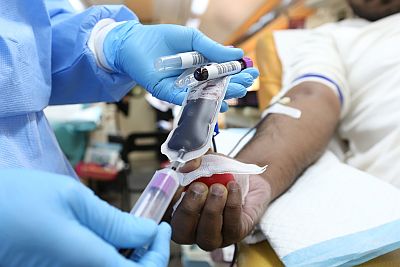 First human patients receive transfusions of lab-grown blood cells, Qubit.hu reported on November 7. Citing information from New Atlas, they reported that these blood cells were produced from stem cells found in the blood. Although this also requires human blood, it is not necessary to comply with the rules of compatibility (the blood group of the donors and patients must be the same). Does the issue of transfusion also arise in relation to wound management and wound healing? We are looking for the answer to this in the current blog post.
The answer is certainly yes, and it has been for a long time, as Gábor Mészáros wrote in Sebkezelés–Sebgyógyulás, the journal of the Hungarian Society of Wound Care, that Ferdinand von Hebra (1816-1880) tried to cure burns with blood transfusion in 1874.
First human patients receive transfusions of lab-grown blood cells, Qubit.hu reported on November 7. Citing information from New Atlas, they reported that these blood cells were produced from stem cells found in the blood. Although this also requires human blood, it is not necessary to comply with the rules of compatibility (the blood group of the donors and patients must be the same). Does the issue of transfusion also arise in relation to wound management and wound healing? We are looking for the answer to this in the current blog post.
The answer is certainly yes, and it has been for a long time, as Gábor Mészáros wrote in Sebkezelés–Sebgyógyulás, the journal of the Hungarian Society of Wound Care, that Ferdinand von Hebra (1816-1880) tried to cure burns with blood transfusion in 1874.
Menstruation and Wound Healing
November 10, 2022
 The mRNA vaccines can temporarily cause heavier menstrual bleeding, Weborvos.hu wrote on November 2. The risk assessment committee of the European Medicines Agency (EMA), PRAC, recommended that heavier than average menstrual bleeding be included among the side effects of Pfizer-BioNTech's and Moderna's vaccines, as well. The menstrual disorder is of unknown frequency for the time being, but it has occurred with the first and second dose as well as with the booster vaccination. Does menstruation also appear in the literature dealing with wound management and wound healing? – we are looking for the answer to this question this week.
Epilepsy and Wound Healing
November 3, 2022
 The Neuraxpharm Group and the mjn-neuro companies have announced that they will cooperate in the distribution of a digital healthcare solution that provides high-level assistance in the prevention of accidents caused by epileptic seizures in drug-resistant patients, reported Medicalonline.hu. mjn-SERAS is a medical device consisting of a non-invasive sensor that records the electrical activity of the brain in real time and, thanks to artificial intelligence algorithms, warns when the risk of an epileptic seizure is high.
Are there points of connection between a disease affecting approximately 0.5-1% of the world's population, the root causes of which may include a brain trauma - wound, injury - and wound treatment? Speaking of this news, we are looking for the answer in this blog post.
The Neuraxpharm Group and the mjn-neuro companies have announced that they will cooperate in the distribution of a digital healthcare solution that provides high-level assistance in the prevention of accidents caused by epileptic seizures in drug-resistant patients, reported Medicalonline.hu. mjn-SERAS is a medical device consisting of a non-invasive sensor that records the electrical activity of the brain in real time and, thanks to artificial intelligence algorithms, warns when the risk of an epileptic seizure is high.
Are there points of connection between a disease affecting approximately 0.5-1% of the world's population, the root causes of which may include a brain trauma - wound, injury - and wound treatment? Speaking of this news, we are looking for the answer in this blog post.
Sleep Apnea and Wound Healing
October 27, 2022
 "Snoring is not the same as having sleep apnea!" - an article was published on October 20, on the opening day of 24th Congress of the Hungarian Wound Care Society, on Weborvos.hu. Sleep apnea is one of the most common sleep disorders in Hungary - we can learn from the article. We should think about it if we feel that we have slept enough at night, but we are constantly tired. Disturbances in attention, memory and concentration, as well as nocturnal urination, are a common phenomenon. Snoring and compensatory bronchial breathing are also symptoms of sleep apnea. Does it also affect wound healing? We are looking for the answer to this question briefly in the current blog post.
Cryolipolysis and Wound Healing
October 13, 2022
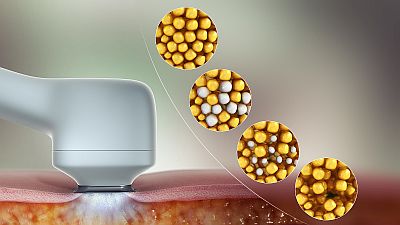 The demand for non-invasive cosmetic procedures is increasing worldwide, but there is not much talk about side effects, even in spite of existing databases such as MAUDE. Based on the processing of data from the Manufacture and User Facility Device Experience database, the researchers came to the conclusion that cryolipolysis (fat freezing) accounts for a significant part of the non-invasive cosmetic interventions with side effects - Medicalonline.hu reported on October 3.
According to an article published in the journal "Lasers in Surgery and Medicine", the most common side effect of such body contouring interventions was paradoxical hyperplasia with 73.2%, in which case extra fat tissue was formed in the area of cryolipolysis. What is cryolipolysis and is it related to wound treatment and healing? – this is what our current blog post is about.
The demand for non-invasive cosmetic procedures is increasing worldwide, but there is not much talk about side effects, even in spite of existing databases such as MAUDE. Based on the processing of data from the Manufacture and User Facility Device Experience database, the researchers came to the conclusion that cryolipolysis (fat freezing) accounts for a significant part of the non-invasive cosmetic interventions with side effects - Medicalonline.hu reported on October 3.
According to an article published in the journal "Lasers in Surgery and Medicine", the most common side effect of such body contouring interventions was paradoxical hyperplasia with 73.2%, in which case extra fat tissue was formed in the area of cryolipolysis. What is cryolipolysis and is it related to wound treatment and healing? – this is what our current blog post is about.
BTX and Wound Healing
October 6, 2022
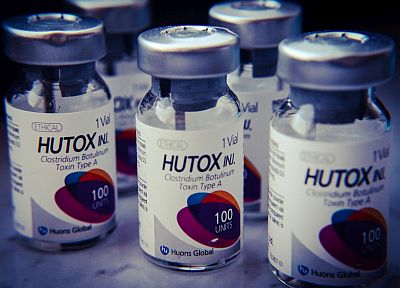 Botulinum toxin (BTX) injected into the forehead can help in the treatment of some psychological diseases, Medicalonline.hu reported on September 26. Researchers from Semmelweis University's outsourced German department, Asklepios Campus Hamburg, and Hannover Medical University found that the so-called in women with borderline personality disorder who received botox, the activity of the area of the brain responsible for processing negative emotions decreased. This confirms previous findings that BTX may also be useful in the treatment of mental problems such as depression and anxiety. Is its application also fruitful in wound treatment? – we are looking for the answer to this in this blog post.
The sources of the illustrations are listed in the respective article.
Menu
Tags
Share:




Follow us!: